
15 Things Professional Cleaners Notice Immediately When They Walk Into Your Home
Your Home Is Telling a Story: 15 Things Professional Cleaners Notice Instantly Professional Cleaning Tips from the Team at Clean Arrival When a professional cleaner walks into a home, they’re not judging your decorating style, your belongings, or whether there’s a pile of laundry waiting to be folded. Instead, they’re noticing dozens of subtle details that help them understand how the home lives, where dust and dirt naturally accumulate, and what areas will need the most attention. After cleaning homes throughout the Portland metro area, we’ve learned that every home has its own personality. Some homes battle muddy footprints during Oregon’s rainy season. Others have energetic dogs that seem to shed enough fur to knit another puppy. Some are immaculate but struggle with hidden dust, while others simply need a little help keeping up with busy family life. The good news is that professional cleaners aren’t looking for perfection. They’re looking for opportunities to make your home healthier, cleaner, and more enjoyable to live in. Whether you clean your own home or are considering hiring a professional cleaning service, these professional cleaning tips will help you see your home through the eyes of an expert. Why Professional Cleaners See Things Homeowners Don’t One of the biggest misconceptions about professional house cleaners is that we simply clean faster. While experience certainly helps us work efficiently, the real difference is that we’ve trained ourselves to recognize patterns. Professional cleaners know: Where dust settles first Which rooms accumulate grime the fastest What surfaces are often overlooked How traffic patterns affect wear and dirt Which cleaning methods work best for different materials Most homeowners naturally focus on the obvious, vacuuming floors, wiping counters, cleaning bathrooms. Professional cleaners also notice the little details that elevate a home from “clean enough” to “professionally cleaned.” Here are the first things we notice. 1. The Air and Overall Smell Before we even take a full look around, we notice the air. Every home has a unique scent, but lingering odors often point us toward areas that need attention. Common sources include: Pet odors Damp towels Cooking grease Garbage cans Dirty garbage disposals Shoes near the entryway Laundry rooms Mildew from excessive moisture A truly clean home doesn’t need to smell heavily perfumed. Fresh, neutral air is usually the best indicator that a home is well maintained. 2. Entryways The front entry tells us a surprising amount about the rest of the house. We immediately notice: Dirt tracked inside Mud from rainy weather Worn welcome mats Shoes collecting debris Dust gathering in corners In Portland, entryways often become the first battle against wet leaves, mud, and moisture. Keeping this area clean dramatically reduces the amount of dirt carried throughout the rest of the home. 3. Floors Floors are one of the biggest indicators of overall maintenance. Professional cleaners notice: Dirt trapped along edges Pet hair under furniture Sticky spots High traffic pathways Dust under tables Built-up grime in corners Many homeowners vacuum the visible areas but unintentionally skip the edges where dirt quietly accumulates week after week. 4. Dust on Horizontal Surfaces Dust settles everywhere. Professional cleaners immediately scan: Shelving Picture frames Television stands Bookshelves Window sills Ceiling fan blades By the time dust becomes obvious, it’s usually been circulating throughout the home for days or even weeks. 5. Kitchen Counters A cluttered kitchen isn’t necessarily dirty. But clutter limits how thoroughly surfaces can be cleaned. We notice: Grease around cooking areas Appliance fingerprints Crumbs under coffee makers Food residue behind small appliances Sticky cabinet fronts Clear counters allow for much more effective cleaning. 6. Bathrooms Bathrooms quickly reveal cleaning habits. Professional cleaners immediately notice: Soap scum Hard water spots Toothpaste splatter Shower glass buildup Grout discoloration Dust behind toilets Routine maintenance prevents these issues from becoming permanent stains. 7. Baseboards Baseboards are one of the most overlooked surfaces in almost every home. Yet they’re one of the easiest ways to make a room feel polished. They collect: Dust Hair Shoe scuffs Pet fur Everyday grime Freshly cleaned baseboards subtly brighten an entire room. 8. High-Touch Surfaces These include: Light switches Door handles Cabinet pulls Refrigerator handles Remote controls Stair railings They’re touched dozens of times every day but often forgotten during routine cleaning. 9. Windows and Natural Light Natural light acts like a spotlight. Professional cleaners quickly notice: Smudges Fingerprints Dirty window tracks Dusty blinds Water spots Sometimes the biggest improvement to a room is simply allowing more clean sunlight inside. 10. Pet Hair We love pets. We also know exactly where their fur hides. Common places include: Furniture Under beds Baseboards Air vents Corners Upholstery Stair edges Pet hair has an incredible ability to travel far beyond where your pet spends most of its time. 11. Cobwebs Most cobwebs form in places people rarely inspect. We check: Ceiling corners Behind doors Light fixtures Above cabinets Garage entrances Removing them instantly freshens a room. 12. Forgotten Spaces Some areas quietly collect dust month after month. Examples include: Behind furniture Under beds Laundry rooms Closet floors Pantry corners Under couches These areas are often addressed during a professional deep cleaning. 13. Appliance Condition Professional cleaners naturally inspect appliances because they receive heavy daily use. We notice: Grease on range hoods Microwave splatter Fingerprints on stainless steel Dust under refrigerators Food buildup around stove controls Clean appliances make an entire kitchen feel newer. 14. Clutter Patterns Professional cleaners don’t expect magazine-perfect homes. However, organization greatly affects cleaning efficiency. The less time spent moving objects, the more time available for detailed cleaning. Even simple habits like giving frequently used items a permanent home can make routine cleaning much easier. 15. Overall Home Maintenance Perhaps the biggest thing we notice isn’t one specific surface. It’s the overall pattern. Is the home regularly maintained? Or has cleaning been postponed until everything feels overwhelming? Homes that receive consistent care stay cleaner longer, experience less wear, and generally require less intensive deep cleaning. What Makes a Home Feel Professionally Clean? Many people assume professional
Cleaning Older Portland Homes – Winter Edition
Why Winter Is Harder on Older Portland Homes (And How to Protect Yours) Portland, Oregon is a city defined by its character. From the historic Craftsman bungalows in Irvington to the Victorian beauties in the alphabet district and the charming bugalows in Sellwood, older homes are the backbone of our city’s aesthetic. However, if you own a piece of Portland history, you know that charm comes with responsibility. While winter is a challenge for any property, it is uniquely brutal on vintage homes. As the rain sets in and the temperature drops, structural vulnerabilities that went unnoticed in July suddenly become expensive emergencies. In this guide, we will explore exactly why winter accelerates wear and tear on older Portland homes, and how a strategic approach to Portland home cleaning and maintenance can prevent long-term damage. Whether you are preparing for a deep clean or looking to preserve your hardwood floors, understanding the “why” behind the wear is the first step to preservation. The Unique Climate Battle: Portland vs. Old Bones To understand why winter is harder, we have to look at the science of the Pacific Northwest. Portland winters are not characterized by extreme sub-zero temperatures like the Midwest. Instead, we face a relentless cycle of wet, freeze, and thaw. We wake up to 34°F and rain, the temperature drops to 28°F overnight, then rises again by noon. This constant fluctuation is a stress test for building materials. Older Portland homes were primarily built with old-growth fir, plaster, and lime mortar. These materials were designed to breathe and move. However, they were not designed for the specific humidity rollercoaster of modern Portland winters combined with our contemporary heating systems. The Mud and Grit Invasion The most immediate issue older homeowners face in winter is the sheer volume of debris tracked inside. In the summer, you walk straight from your driveway into the house. In the winter, you walk through a layer of pine needles and wet leaves on the porch, a muddy pathway, and possibly moss-covered steps. This isn’t just an aesthetic issue; it’s an abrasive one. The Damage: Grit and sand act like sandpaper. When tracked onto vintage fir floors or original tile, the foot traffic literally grinds the finish away. Unlike modern vinyl plank flooring, sanding and refinishing old-growth wood is an expensive, invasive process. The Solution: This is where high-frequency Portland home cleaning becomes preservation, not just cosmetics. A professional cleaning service focusing on entryways during winter doesn’t just make the home feel better; it extends the life of your flooring. Placing high-quality, long runners at every exterior door and scheduling bi-weekly vacuuming of high-traffic areas stops the grit before it etches your heritage surfaces. The “Ghosting” Effect on Walls and Ceilings If you own an older Portland home, you may have noticed dark stains appearing along the edges of your walls or around ceiling joists during the colder months. This phenomenon is often mistaken for mold, but it is usually “thermal bridging” or “ghosting.” Older homes lack the insulation density of modern builds. Cold spots form on the wall studs or joists. When warm, humid air from your shower or cooking meets these cold spots, condensation occurs. This damp dust attracts airborne soot and particles, creating those permanent-looking black lines. The Damage: If ignored, the moisture trapped behind this dirt can cause paint to peel and, eventually, mildew growth in the plaster keys. The Fix: Effective cleaning older homes Portland strategies recognize that you cannot simply wipe these marks away with a standard sponge. Plaster is porous and sensitive to water. Using dry chemical sponges or very low-moisture techniques is essential to remove the soot without saturating the walls and inviting mold behind the paint. Pollen and Moss Overload Portland winters are not dormant. Unlike the East Coast, where snow covers everything, Portland’s winter is a growing season for conifers and moss. Fir and cedar trees release pollen and debris throughout the winter, not just spring. This fine, yellow dust finds its way through the smallest gaps in vintage window sashes. Furthermore, moss grows rapidly on north-facing roof slopes and decks. As moss dies back in the wet cold, it turns into a slippery, black, organic sludge that gets walked through the house. The Damage: Moss holds moisture against wood surfaces. On cedar shingle siding (common in Portland’s older homes), moss growth accelerates rot and creates entry points for carpenter ants. The Strategy: Homeowners focused on cleaning older homes Portland must adopt a year-round exterior maintenance schedule. A soft wash of the roof and siding in late fall removes moss spores before they take hold, drastically reducing the organic matter that eventually ends up inside. Air Pressure and the “Dust Cocktail” Older Portland homes breathe. This is a feature, not a bug. However, winter changes the air pressure dynamics. When you turn on your furnace (especially if it is a forced-air system retrofitted into an old gravity heat home), you create negative pressure. The house tries to suck air from anywhere it can: the crawlspace, the attic, and gaps in the foundation. The Damage: You aren’t just heating recirculated air; you are heating air that has passed through your dirty crawlspace. This air carries fine particulate, insulation fibers, and centuries-old soil dust into your living room. This is why some homes feel “dusty” just hours after cleaning. The Solution: This requires a dual approach. HVAC Cleaning: Ensuring ductwork is sealed and clean. Source Removal: Deep cleaning of basements and crawlspaces to remove the loose debris that gets recirculated. Professional Portland home cleaning services often recommend a “pre-winter deep clean” of the basement to eliminate the dust reservoir before the heating season begins. Fireplaces and Wood Stoves Many vintage Portland homes retain their original masonry fireplaces. While cozy, winter fire season is also soot season. Even the cleanest-burning fireplace emits microscopic ash particles. These particles are electrostatic and cling to vertical surfaces like walls, picture frames, and television screens. In an open-plan old home, this soot travels far beyond the living room. The Damage: Soot is acidic. If left on surfaces for weeks, it can etch glass and
Why Portland Homes Need a Different Approach to Cleaning
Why Portland Homes Need a Different Approach to Cleaning Portland home cleaning When people think about house cleaning, they often imagine a one-size-fits-all checklist: vacuum, mop, wipe surfaces, repeat. But anyone who lives in Portland knows that homes here face unique environmental, architectural, and lifestyle challenges that require a more thoughtful approach. From constant rain and muddy shoes to pet-friendly households, older home construction, and indoor air quality concerns, Portland home cleaning isn’t the same as cleaning in drier, newer, or more uniform cities. Understanding these local factors isn’t just helpful, it’s essential for keeping homes healthy, comfortable, and well-maintained year-round. Below, we’ll explore why Portland homes truly need a different approach to cleaning, and what that means for homeowners, renters, and anyone responsible for caring for a home in the Pacific Northwest. Rain Is a Way of Life and It Changes Everything If you live in Portland, you already know: rain isn’t seasonal it’s structural. Months of consistent moisture impact homes in ways that dry climates simply don’t experience. How Rain Affects Portland Homes Constant mud and grit tracked in from sidewalks, yards, and trails Moisture buildup near entryways, baseboards, and lower walls Faster wear on floors, rugs, and door thresholds Increased risk of mildew and mold, especially in poorly ventilated spaces Why Standard Cleaning Isn’t Enough Quick vacuuming or surface mopping doesn’t fully remove the fine grit and moisture that settle deep into flooring materials. Over time, this leads to: Scratched hardwood and laminate Dingy carpets that never look “fully clean” Persistent odors caused by trapped moisture A Portland-specific cleaning approach emphasizes: Frequent deep cleaning of entryways Proper drying techniques, not just surface wiping Floor-safe methods that protect finishes from water damage Mud Season Is Practically Year-Round In many regions, mud is a spring problem. In Portland, it’s a fall, winter, and spring reality, and sometimes even summer. The Hidden Problem With Mud Mud isn’t just dirt. It’s a mixture of: Soil particles Organic matter Moisture Pollutants from sidewalks and streets When mud gets tracked indoors, it embeds itself into: Carpet fibers Grout lines Textured flooring Upholstery Portland Home Cleaning Must Be Preventive A local-focused approach prioritizes: Entryway zoning (targeted cleaning where mess starts) Regular baseboard and corner detailing Floor care methods that lift debris instead of spreading it Without this attention, homes can look clean on the surface while accumulating grime where it’s hardest to remove. Portland Is One of the Most Pet-Friendly Cities in the U.S. Dogs in raincoats, muddy paws, and cats perched on every surface, pets are part of Portland culture. That’s wonderful, but it creates very specific cleaning challenges. Common Pet-Related Cleaning Issues Hair embedded in rugs, upholstery, and corners Paw prints and smudges on floors and walls Lingering odors, especially in damp conditions Dander contributing to indoor air quality issues Why Pet Homes Need Specialized Care Pet hair and dander behave differently in humid environments. They cling more stubbornly to surfaces and circulate more easily through indoor air. Effective Portland home cleaning for pet households involves: HEPA-filter vacuums to reduce airborne allergens Detailed attention to edges, furniture bases, and under couches Pet-safe products that clean thoroughly without harsh chemicals This is especially important in homes where pets spend more time indoors due to rainy weather. Older Homes Require More Than Surface-Level Cleaning Portland is known for its charming older homes, Craftsman bungalows, mid-century houses, and historic builds that add character and warmth. But older homes come with unique cleaning considerations. Common Features of Older Portland Homes Original hardwood floors Plaster walls Vintage tile and grout Older ventilation systems Why a Different Cleaning Approach Matters Aggressive or generic cleaning methods can actually damage older materials. For example: Excess water can warp old hardwood Harsh chemicals can degrade original finishes Improper tools can scratch delicate surfaces A Portland-aware cleaning strategy focuses on: Gentle but effective techniques Product choices appropriate for historic materials Detailed care instead of rushed, high-impact cleaning Preserving the integrity of older homes requires both experience and respect for the structure itself. Indoor Air Quality Is a Bigger Concern Than You Think Because of frequent rain, many Portland residents keep windows closed for much of the year. While this helps maintain warmth, it also traps dust, allergens, and moisture indoors. What Impacts Indoor Air in Portland Homes Pet dander Dust and pollen tracked in from outside Moisture buildup leading to musty odors Infrequent air circulation How Cleaning Affects Air Quality Thoughtful Portland home cleaning addresses more than visible mess. It includes: Dusting vents, baseboards, and ceiling corners Using vacuum systems that capture fine particles Reducing moisture-prone buildup in kitchens and bathrooms A cleaner home isn’t just about appearance, it’s about breathing easier and supporting overall well-being. Eco-Conscious Living Is Part of Portland Culture Many Portland households prioritize sustainability, whether that means composting, reducing waste, or choosing eco-friendly products. Cleaning is no exception. Why Product Choice Matters In a damp climate, harsh chemicals can: React poorly with moisture Leave residues that linger longer Contribute to indoor air irritation A locally informed cleaning approach often favors: Low-residue, eco-conscious products Methods that rely on technique, not chemical strength Practices that protect both surfaces and people This aligns with Portland’s values while still delivering a truly clean home. A Detail-Oriented Checklist—Applied With Portland Homes in Mind At Clean Arrival, we believe consistency matters. That’s why our cleaning is built around a detailed, standardized checklist that ensures every home receives thorough, reliable care, no matter the size or layout. However, in Portland, how that checklist is applied matters just as much as what’s on it. Because of local conditions like persistent rain, muddy entryways, pet-heavy households, older construction, and indoor air quality concerns, our team pays extra attention to certain areas that Portland homes rely on most. That often means: Spending more time on entryways, thresholds, and floors where moisture and grit accumulate Giving added focus to baseboards, corners, and edges that collect damp dust Adjusting techniques for older materials like original hardwood or vintage tile
Top 5 Cleaning Tools Every Home Should Have
When it comes to keeping a home spotless, stocked cleaning supplies are only part of the equation. Having the top cleaning tools on hand can save you time, effort, and frustration while helping you achieve a deeper, longer-lasting clean. Whether you’re tackling spring cleaning, routine maintenance, or the occasional mess, the right tools make all the difference. At Clean Arrival Home Services, we rely on tried-and-true cleaning tools every day in our professional work across Portland and the surrounding areas. Below, we’ll walk through the five essential cleaning tools every home should have, why they matter, and how they can simplify your routine. 1. A High-Quality Vacuum Cleaner No list of the top cleaning tools would be complete without a vacuum cleaner. Floors and carpets are magnets for dust, pet hair, and dirt, and a dependable vacuum helps you tackle them quickly. What to Look For: Strong Suction Power – ensures deep cleaning of carpets and rugs. Versatility – attachments for upholstery, stairs, and crevices extend usefulness. HEPA Filtration – essential for households with allergies or pets. Pro Tip: Bagless vacuums may be convenient, but bagged models often contain dust better, making them ideal for allergy-sensitive homes. For hardwood and tile, consider adding a vacuum with a “hard floor mode” that won’t scratch surfaces. Why It Matters: A good vacuum cuts your cleaning time in half, reduces allergens, and helps keep flooring in top condition for years to come. 2. Microfiber Cloths Paper towels are wasteful and regular rags often push dirt around rather than lifting it. Microfiber cloths, on the other hand, are reusable, eco-friendly, and one of the top cleaning tools professionals swear by. Benefits of Microfiber: Superior Absorption – absorbs several times its weight in liquid. Non-Abrasive – safe for delicate surfaces like glass, mirrors, and electronics. Electrostatic Properties – traps dust and debris rather than spreading it. How to Use Them: Keep different colors for different tasks (e.g., blue for glass, green for kitchens, yellow for bathrooms) to prevent cross-contamination. Wash them without fabric softener to maintain their absorbency. Why It Matters: Microfiber makes cleaning faster, streak-free, and more hygienic while cutting down on waste. 3. A Reliable Mop System Mopping is often a dreaded chore, but with the right mop, it doesn’t have to be. Whether you prefer a classic string mop, a flat microfiber mop, or a spin mop, having a reliable floor-cleaning system is essential. Options to Consider: Spin Mops – wring out excess water easily for faster drying. Spray Mops – perfect for quick daily touch-ups. Steam Mops – sanitize floors without chemicals, ideal for families with kids or pets. Pro Tip: Always vacuum or sweep before mopping to avoid pushing grit around. And use the correct cleaning solution for your flooring type to prevent damage. Why It Matters: Floors take the brunt of daily life, keeping them clean not only improves appearance but also extends their life and creates a healthier living space. 4. A Sturdy Scrub Brush From bathroom grout to kitchen sinks, there are surfaces that demand more than a cloth. A durable scrub brush with stiff bristles belongs on every top cleaning tools list. Types of Brushes Worth Having: Handheld Scrub Brush – ideal for tile, grout, and stubborn messes. Dish Brush with Handle – keeps hands out of greasy water. Detailing Brush – perfect for crevices, faucets, and tight corners. Pro Tip: Keep a dedicated brush for the bathroom separate from the one you use in the kitchen. And remember, a brush with an ergonomic handle saves your wrists during heavy scrubbing. Why It Matters: The right scrub brush powers through buildup and grime, making the toughest jobs less intimidating. 5. An Extendable Duster Dust is sneaky—it collects on baseboards, ceiling fans, blinds, and light fixtures where you may not notice it until it’s thick. An extendable duster ensures no corner is out of reach. Features to Look For: Telescoping Handle – reaches up to ceiling corners. Washable Head – saves money and reduces waste. Flexible Design – bends to clean behind furniture or around ceiling fans. Pro Tip: Pair your duster with a microfiber head to trap dust instead of sending it into the air. Why It Matters: Regular dusting improves air quality, reduces allergens, and keeps your home looking freshly cleaned longer. Honorable Mentions While the five tools above are must-haves, a few other helpful additions include: Spray Bottles – for DIY cleaning solutions. Rubber Gloves – protect hands from harsh chemicals. Toilet Brush with Holder – a bathroom staple. These aren’t strictly part of the “top five,” but they round out a well-equipped cleaning toolkit. Why These Tools Matter Investing in the top cleaning tools isn’t just about convenience, it’s about efficiency, health, and peace of mind. With the right tools: You clean faster and more effectively. You protect your home’s surfaces and extend their lifespan. You improve your indoor air quality and reduce allergens. When combined with safe cleaning products and a consistent routine, these tools help you create a healthier, more comfortable living space. Professional Help When You Need It Even with the best tools, sometimes life gets too busy to keep up with deep cleaning. That’s where Clean Arrival Home Services comes in. Our professional team brings all the top cleaning tools and expertise needed to make your home shine. Whether you’re looking for a one-time deep clean or ongoing maintenance, we’re here to help Portland-area families reclaim their time and enjoy cleaner, healthier homes. Final Thoughts Every homeowner wants a clean, inviting home, but the right equipment makes that goal achievable without the stress. By equipping yourself with a high-quality vacuum, microfiber cloths, a reliable mop, a sturdy scrub brush, and an extendable duster, you’ll have the top cleaning tools to handle nearly any mess that life throws your way. Want a spotless home without lifting a finger? Contact Clean Arrival Home Services today, we’ll bring the tools, skills, and attention to detail so you can enjoy the results.
Summer Cleaning Checklist
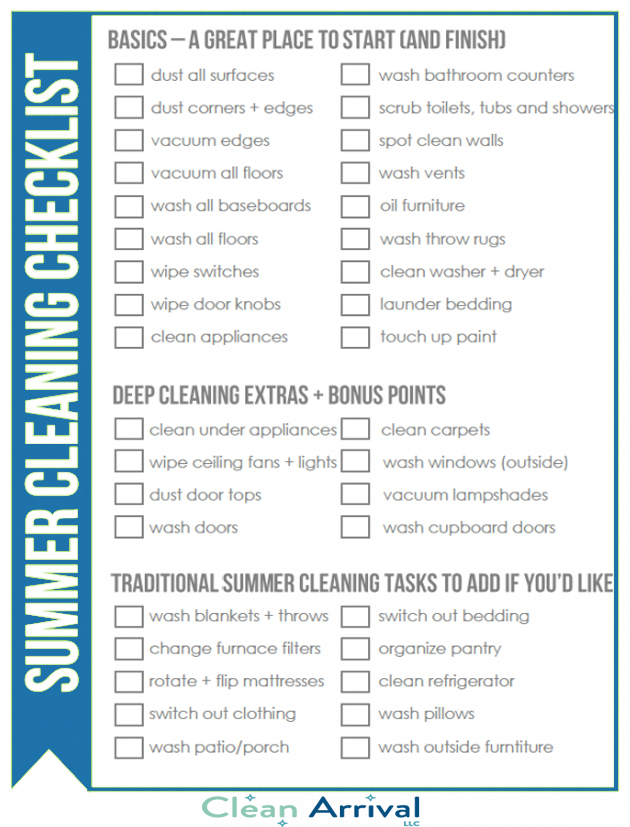
Portland Summer Cleaning Checklist Summer is a wonderful time of year, particularly in the Pacific Northwest and more specifically, in Portland Oregon. Considering we get ridiculous amounts of rain and gloomy clouds almost 10 months a year means when the sun does finally stick around for a while the entire city pretty much goes into a UV filled frenzy of fun activities from river floats, camping, BBQing, parades, and outdoor concerts. Having all these awesome activities to do in such a short and sweet amount of time can make it tough to fit in your summer cleaning. Fortunately, we made this summer cleaning checklist to help you prioritize your next big clean. If you find yourself too busy, then you can always contact us to take care of the cleaning for you! Summer is without a doubt the busiest time of year for the Portland metro area as it not only becomes peak tourist season where you will likely have friends or family coming to visit, but the kids are also out of school. This combination can quickly eat up your time and having guests and kids running amock can quickly make a mess of your home. One of the best things about Clean Arrival LLC, apart from our highly qualified and professional team, is our convenient online booking. If you find yourself constantly on the go this summer, then enjoy your time with your family and friends and leave the dreary work up to us. Summer Cleaning Checklist Below is our basic routine cleaning for a summer cleaning checklist which we created to help you organize and prioritize your cleaning schedule. This itemized list is intended to help you visualize your cleans to be the most effective and thorough as possible, much like our staff is trained to do so as to keep our quality and standards up. Some of these may not apply to your home or maybe some items aren’t very important to you like cleaning spots on the walls but these are just some of the things our team does on a daily basis. Basic Cleaning Checklist The Basic Cleaning section is where most people operate and is the meat and potatoes of any typical cleaning objective of “make the house presentable”. For the average homeowner this can easily take a few hours without the help of your kids or significant other. This routine cleaning covers the most important and easily noticeable areas in your home: Dust all surfaces Dust corners and edges Vacuum edges Vacuum all floors Wash all baseboards Wash all floors Wipe switches Wipe doorknobs Clean appliances Wash bathroom counters Scrub toilet, tub, and shower Spot clean walls Clean Vents Oil furniture Clean rugs Deep Cleaning Checklist Deep Cleaning is where you will typically go above and beyond keeping up with the outside appearances of your home and get more into the nitty-gritty. Clean under appliances Wipe ceiling fans and lights Dust doortops Wash doors Clean carpets Wash windows Vacuum lampshades Wash cupboards Additional Summer Cleaning This section is where you can add on specific summer cleaning tasks for in and outside your home. Clean and organize the garage Clean the laundry room Rake up leaves and the garden Clean the refrigerator Wash the patio Wash outside furniture Switch out bedding Organize pantry Change HVAC filters Clean the dog pen Basically anything else If you find yourself frantically trying to find time to run your errands this summer while also keeping your house clean then give us a call. We specialize in opening up agendas by taking away the monotonous busy work you constantly have to do to keep your house in order. We’re your best friends when it comes to keeping a clean home and freeing up time you may otherwise have been stuck doing the dishes. Portland Summer Cleaning Checklist For the best local summer cleaning services you can contact Clean Arrival LLC. To schedule, a cleaning service visit our booking page or call us at 503-567-5404. You can also message us on Facebook or email us here. Other Articles You May Like: Move-In Cleaning Move-Out Cleaning Real Estate Cleaning House Cleaning Green Cleaning Green Maid After Party Cleaning Tipping Etiquette