
Why Winter Is Harder on Older Portland Homes (And How to Protect Yours)
Portland, Oregon is a city defined by its character. From the historic Craftsman bungalows in Irvington to the Victorian beauties in the alphabet district and the charming bugalows in Sellwood, older homes are the backbone of our city’s aesthetic. However, if you own a piece of Portland history, you know that charm comes with responsibility.
While winter is a challenge for any property, it is uniquely brutal on vintage homes. As the rain sets in and the temperature drops, structural vulnerabilities that went unnoticed in July suddenly become expensive emergencies.
In this guide, we will explore exactly why winter accelerates wear and tear on older Portland homes, and how a strategic approach to Portland home cleaning and maintenance can prevent long-term damage. Whether you are preparing for a deep clean or looking to preserve your hardwood floors, understanding the “why” behind the wear is the first step to preservation.

The Unique Climate Battle: Portland vs. Old Bones
To understand why winter is harder, we have to look at the science of the Pacific Northwest.
Portland winters are not characterized by extreme sub-zero temperatures like the Midwest. Instead, we face a relentless cycle of wet, freeze, and thaw. We wake up to 34°F and rain, the temperature drops to 28°F overnight, then rises again by noon. This constant fluctuation is a stress test for building materials.
Older Portland homes were primarily built with old-growth fir, plaster, and lime mortar. These materials were designed to breathe and move. However, they were not designed for the specific humidity rollercoaster of modern Portland winters combined with our contemporary heating systems.
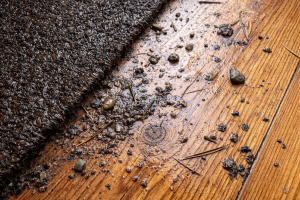 The Mud and Grit Invasion
The most immediate issue older homeowners face in winter is the sheer volume of debris tracked inside.
In the summer, you walk straight from your driveway into the house. In the winter, you walk through a layer of pine needles and wet leaves on the porch, a muddy pathway, and possibly moss-covered steps. This isn’t just an aesthetic issue; it’s an abrasive one.
The Damage: Grit and sand act like sandpaper. When tracked onto vintage fir floors or original tile, the foot traffic literally grinds the finish away. Unlike modern vinyl plank flooring, sanding and refinishing old-growth wood is an expensive, invasive process.
The Solution:
This is where high-frequency Portland home cleaning becomes preservation, not just cosmetics. A professional cleaning service focusing on entryways during winter doesn’t just make the home feel better; it extends the life of your flooring. Placing high-quality, long runners at every exterior door and scheduling bi-weekly vacuuming of high-traffic areas stops the grit before it etches your heritage surfaces.
The “Ghosting” Effect on Walls and Ceilings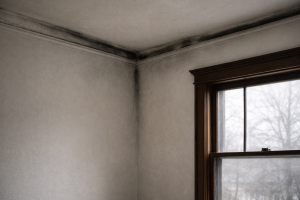
If you own an older Portland home, you may have noticed dark stains appearing along the edges of your walls or around ceiling joists during the colder months.
This phenomenon is often mistaken for mold, but it is usually “thermal bridging” or “ghosting.” Older homes lack the insulation density of modern builds. Cold spots form on the wall studs or joists. When warm, humid air from your shower or cooking meets these cold spots, condensation occurs. This damp dust attracts airborne soot and particles, creating those permanent-looking black lines.
The Damage: If ignored, the moisture trapped behind this dirt can cause paint to peel and, eventually, mildew growth in the plaster keys.
The Fix:
Effective cleaning older homes Portland strategies recognize that you cannot simply wipe these marks away with a standard sponge. Plaster is porous and sensitive to water. Using dry chemical sponges or very low-moisture techniques is essential to remove the soot without saturating the walls and inviting mold behind the paint.
Pollen and Moss Overload
Portland winters are not dormant. Unlike the East Coast, where snow covers everything, Portland’s winter is a growing season for conifers and moss.
Fir and cedar trees release pollen and debris throughout the winter, not just spring. This fine, yellow dust finds its way through the smallest gaps in vintage window sashes. Furthermore, moss grows rapidly on north-facing roof slopes and decks. As moss dies back in the wet cold, it turns into a slippery, black, organic sludge that gets walked through the house.
The Damage: Moss holds moisture against wood surfaces. On cedar shingle siding (common in Portland’s older homes), moss growth accelerates rot and creates entry points for carpenter ants.
The Strategy:
Homeowners focused on cleaning older homes Portland must adopt a year-round exterior maintenance schedule. A soft wash of the roof and siding in late fall removes moss spores before they take hold, drastically reducing the organic matter that eventually ends up inside.
Air Pressure and the “Dust Cocktail”
Older Portland homes breathe. This is a feature, not a bug. However, winter changes the air pressure dynamics.
When you turn on your furnace (especially if it is a forced-air system retrofitted into an old gravity heat home), you create negative pressure. The house tries to suck air from anywhere it can: the crawlspace, the attic, and gaps in the foundation.
The Damage: You aren’t just heating recirculated air; you are heating air that has passed through your dirty crawlspace. This air carries fine particulate, insulation fibers, and centuries-old soil dust into your living room. This is why some homes feel “dusty” just hours after cleaning.
The Solution:
This requires a dual approach.
-
HVAC Cleaning: Ensuring ductwork is sealed and clean.
-
Source Removal: Deep cleaning of basements and crawlspaces to remove the loose debris that gets recirculated.
Professional Portland home cleaning services often recommend a “pre-winter deep clean” of the basement to eliminate the dust reservoir before the heating season begins.
Fireplaces and Wood Stoves
Many vintage Portland homes retain their original masonry fireplaces. While cozy, winter fire season is also soot season.
Even the cleanest-burning fireplace emits microscopic ash particles. These particles are electrostatic and cling to vertical surfaces like walls, picture frames, and television screens. In an open-plan old home, this soot travels far beyond the living room.
The Damage: Soot is acidic. If left on surfaces for weeks, it can etch glass and tarnish metal fixtures. It also creates a distinct odor that embeds into drapes and upholstery.
The Cleaning Protocol:
Cleaning older homes Portland requires attention to vertical surfaces, not just floors. During winter months, microfiber cloths on extension wands should be used weekly to capture airborne soot before it bonds with wall paint.
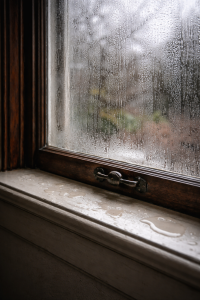 Condensation on Historic Windows
Single-pane wood windows are beautiful, but thermally terrible. When warm indoor air hits that cold glass, condensation forms instantly. In a Portland winter, many older homes run rivers of water down the sills.
The Damage:
-
Varnish Decay: Water sits on the sill, turning the varnish white and cloudy.
-
Staining: Water seeps between the sash and the stool, staining the wood from the inside out.
-
Mold: The constant dampness on the wood surface and the sash cords creates a perfect environment for black mold.
Preservation Cleaning:
Homeowners must shift from “dusting” windows to “drying” windows. Keeping sills completely dry is the only way to save the original wood. A thorough Portland home cleaning routine in winter includes checking every sill daily and removing the organic debris that holds moisture against the paint.
The Grime Layer on Hard-to-Reach Areas
In the summer, we open windows. We notice the cobwebs in the corners and the dust on the transoms. In the winter, the house is buttoned up. We stop looking up.
The problem is that dust doesn’t stop accumulating just because you can’t see it in the low winter light. Light fixtures, picture rails, and crown molding continue to collect debris. By February, this layer is thick enough to insulate dirt, making it much harder to remove.
The Solution:
Schedule a “mid-winter refresh.” This is not a full deep clean, but a targeted service focusing on the “forgotten” zones: high ceilings, light fixtures, and behind large furniture pieces. This prevents the buildup from becoming so sticky that it requires repainting.
Holiday Traffic and Indoor Particulate
Let’s be honest: winter is the season of staying inside. More bodies, more pets, more cooking, and more stuff (blankets, shoes, coats) crammed into the space.
This increased occupancy spikes the particulate matter in the air. Skin cells, fabric fibers from wool coats, and cooking grease combine to create a film over kitchen cabinets and shelving.
The Preservation Mindset:
For owners of historic homes, cleaning isn’t about vanity; it is about preservation. The film that settles on kitchen cabinet tops during December contains oils that, if left until spring, can degrade the original varnish.
Cleaning older homes Portland means addressing the kitchen exhaust system specifically. Ensuring range hoods are clean and functional removes grease vapor before it settles on vintage cabinetry.
Deferred Maintenance Becomes Emergency Repairs
Ultimately, winter is harder on older Portland homes because problems don’t stay hidden.
A small crack in the foundation caulking in August is just a crack. A small crack in the foundation caulking in February, combined with a month of steady rain, is a puddle in your finished basement. A missing roof shingle in July is a to-do list item. A missing roof shingle in December is a water stain on your 100-year-old plaster ceiling rose.
Winter forces the issue.
Your Winter Preservation Checklist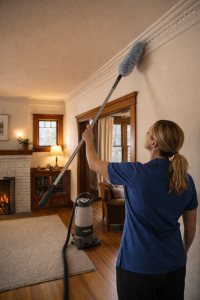
To help your older Portland home survive and thrive through the cold months, integrate these tasks into your routine:
-
Doormat Triangulation: Place a scraper mat outside, a water-absorbent mat inside the door, and a decorative runner beyond that. This triple defense captures 80% of winter grit.
-
Weekly Vertical Dusting: Use an electrostatic duster on walls and picture rails weekly to prevent soot and dust adhesion.
-
Monitor Humidity: Keep indoor humidity between 40-45%. Too high, and you get condensation; too low, and your wood flooring dries out and cracks.
-
Schedule Professional Support: A bi-weekly professional Portland home cleaning service during Dec-Feb is the most effective defense against the specific challenges of vintage home decay.
Cleaning as an Act of Preservation
Owning an older home in Portland is a privilege. It is also a commitment. In a new construction home, winter cleaning is about aesthetics. In a 1910 Craftsman, winter cleaning is about structural integrity.
By understanding that the mud on your floor is sandpaper for your fir, and the fog on your windows is a solvent for your varnish, you change your perspective. You stop viewing cleaning older homes Portland as a chore and start viewing it as conservation.
If you are looking for a cleaning team that understands the difference between laminate and old-growth fir, or the sensitivity of lime plaster versus drywall, consider partnering with a service that specializes in the unique architecture of the Pacific Northwest.
Protect your investment. Honor the craftsmanship. And breathe easier this winter.