
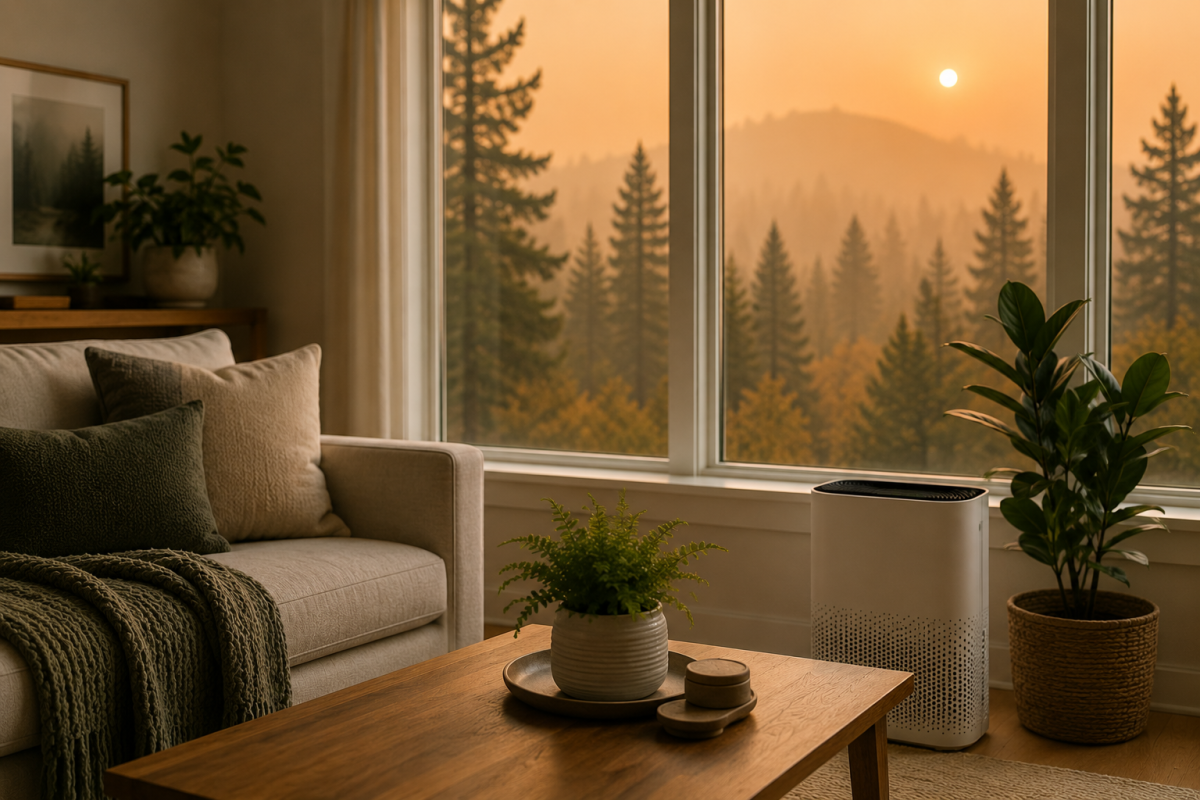
Wildfire Smoke Is Getting Inside Your Home: Here’s What Every Homeowner Should Know
Protecting Your Home During Wildfire Season in the Portland Metro Area
For many homeowners in Oregon, wildfire season has become an unfortunate part of life. Even when the nearest fire is hundreds of miles away, smoke can drift into the Portland metro area, turning the sky hazy and prompting air quality alerts.
Most people understand the health risks of breathing wildfire smoke outdoors. What many don’t realize is that wildfire smoke also finds its way inside your home, where it can linger for day, or even week, after the air outside has cleared.
At Clean Arrival, we’ve seen firsthand how wildfire smoke affects homes throughout Portland, Lake Oswego, West Linn, Happy Valley, Beaverton, Tigard, and the surrounding communities. Fine smoke particles settle onto surfaces, become trapped in carpets and upholstery, and can continue circulating through your home long after wildfire season ends.
Understanding what wildfire smoke does inside your home, and how to remove i, can help protect both your home and your family’s health.
How Does Wildfire Smoke Get Inside?
Many homeowners assume that closing their windows keeps smoke outside.
Unfortunately, wildfire smoke particles are incredibly small.
Tiny openings around:
- doors
- windows
- attic vents
- HVAC systems
- dryer vents
- bathroom exhaust fans
allow microscopic smoke particles to enter.
Every time someone opens a door, smoke also comes inside.
Once inside, those particles don’t simply disappear.
What Is Wildfire Smoke Made Of?
Wildfire smoke contains a mixture of:
- microscopic ash
- soot
- organic compounds
- carbon particles
- volatile organic compounds (VOCs)
- PM2.5 fine particulate matter
PM2.5 particles are especially concerning because they’re small enough to stay suspended in the air for long periods before settling throughout your home.
Because these particles are nearly invisible, many homeowners don’t realize they’re accumulating indoors.
Where Smoke Particles Settle
Professional cleaners know that smoke follows airflow.
Some of the most common places smoke settles include:
Upholstered Furniture
Couches, chairs, and fabric furniture act almost like air filters.
Tiny smoke particles become trapped in fibers where they can continue affecting indoor air quality.
Carpets and Rugs
Carpet fibers collect enormous amounts of dust throughout the year.
Wildfire smoke simply becomes another contaminant trapped inside those fibers.
Every time someone walks across the carpet, some of those particles become airborne again.
Curtains and Window Treatments
Curtains often sit near open windows or ventilation systems.
They absorb smoke odors surprisingly quickly.
Bedding
Sheets, comforters, blankets, and pillows can all collect smoke particles.
Regular laundering becomes especially important during wildfire season.
HVAC Systems
Your heating and cooling system circulates air throughout your entire home.
If filters aren’t changed regularly, smoke particles continue moving from room to room.
Dirty HVAC filters also reduce the system’s efficiency.
Hard Surfaces
Smoke eventually settles on:
- countertops
- bookshelves
- televisions
- electronics
- picture frames
- ceiling fans
- baseboards
While these surfaces may appear clean, they often have an invisible layer of fine particulate matter.
Why Dust Seems Worse After Wildfire Season
Many homeowners notice their homes become dustier following periods of heavy smoke.
That’s because wildfire smoke doesn’t replace normal household dust, it adds to it.
Your home is now collecting:
- regular household dust
- outdoor pollen
- pet dander
- human skin cells
- fabric fibers
- wildfire smoke particles
This combination creates more frequent dust buildup and can make surfaces appear dirty much sooner.
Can Wildfire Smoke Affect Indoor Air Quality?
Absolutely.
Indoor air can sometimes become nearly as polluted as outdoor air if smoke is allowed to accumulate.
This is especially important for:
- children
- older adults
- people with asthma
- allergy sufferers
- individuals with respiratory conditions
Even after outdoor air quality improves, indoor smoke particles may continue circulating unless they’re removed.
How to Reduce Smoke Inside Your Home
Fortunately, there are several steps homeowners can take.
Keep Windows Closed During Smoke Events
While fresh air is usually beneficial, keeping windows closed during heavy smoke helps limit the amount of particulate matter entering your home.
Replace HVAC Filters More Frequently
Consider upgrading to higher-efficiency filters compatible with your HVAC system.
During wildfire season, filters may need replacement more often than usual.
Use a HEPA Air Purifier
Portable HEPA air purifiers can significantly reduce airborne particles in frequently used rooms like bedrooms and living rooms.
Vacuum With a HEPA Vacuum
Not all vacuums improve indoor air quality.
Some inexpensive vacuums simply blow fine particles back into the room.
Professional-grade HEPA vacuums capture much smaller particles, including many associated with wildfire smoke.
Dust Correctly
Avoid dry dusting.
Instead:
- use damp microfiber cloths
- work from top to bottom
- rinse cloths frequently
This removes particles instead of spreading them.
Wash Fabrics
Smoke particles cling to fabric.
Wash:
- bedding
- blankets
- pillow covers
- curtains (when appropriate)
- washable rugs
This helps remove both smoke residue and odors.
When Should You Schedule a Deep Cleaning?
If your home experienced several weeks of smoky conditions, a professional deep cleaning can help remove smoke particles that routine cleaning often misses.
Professional cleaners focus on:
- detailed dust removal
- ceiling fans
- baseboards
- window sills
- high shelving
- hard-to-reach areas
- detailed vacuuming
- hard floor cleaning
While no cleaning can eliminate every airborne particle, removing settled dust significantly improves the overall cleanliness of your home.
Prevent Smoke Buildup Before It Starts
Preparation makes a difference.
Before wildfire season begins:
✓ Replace HVAC filters.
✓ Inspect weather stripping.
✓ Stock extra air filters.
✓ Clean ceiling fans.
✓ Schedule a deep cleaning.
A cleaner home has fewer existing dust particles for smoke to combine with.
Frequently Asked Questions
Can wildfire smoke stay in my house after the smoke outside is gone?
Yes. Smoke particles can remain on surfaces, in carpets, upholstery, curtains, and HVAC systems long after outdoor air quality improves.
Does vacuuming remove wildfire smoke?
It can, but only if you’re using a quality vacuum with an effective filtration system. Vacuums equipped with HEPA filters are much better at trapping fine particles instead of recirculating them.
Can smoke particles stay in carpet?
Yes.
Carpet fibers trap microscopic particles very effectively.
Regular vacuuming helps, while periodic professional carpet cleaning can remove additional residue.
Should I clean more often during wildfire season?
Generally, yes.
Dusting, vacuuming, and changing HVAC filters more frequently helps reduce the buildup of smoke particles indoors.
Is professional cleaning worth it after wildfire season?
For many homeowners, especially those with allergies, asthma, pets, or young children, a thorough deep cleaning after wildfire season can help remove accumulated smoke residue and restore a fresher indoor environment.
Breathe Easier with Clean Arrival
Wildfire smoke is becoming an increasingly common part of life in Oregon, but it doesn’t have to linger inside your home.
At Clean Arrival, we help homeowners throughout the Portland metro area maintain healthier, cleaner homes year-round. Our detailed cleaning process focuses on the places where dust, allergens, and fine particles naturally collect, helping your home feel fresher after wildfire season and beyond.
Whether you’re looking for a one-time deep clean or recurring cleaning service, our experienced team is here to help you enjoy a cleaner home and more peace of mind.
Ready to refresh your home after wildfire season? Contact Clean Arrival today for a free estimate and let us help you breathe a little easier.